Across Some Earthly Firmament – David Copperfield

Today, Oomska wishes a very happy 200th birthday to Charles Dickens. Here we present a favourite passage, from a favourite chapter, from a book that’s a favourite of ours, and of the inimitable Mr Dickens himself: none other than ‘The Personal History of David Copperfield’.

“I went on, by passing the wine faster and faster yet, and continually starting up with a corkscrew to open more wine, long before any was needed. I proposed Steerforth’s health. I said he was my dearest friend, the protector of my boyhood, and the companion of my prime. I said I was delighted to propose his health. I said I owed him more obligations than I could ever repay, and held him in a higher admiration than I could ever express. I finished by saying, ‘I’ll give you Steerforth! God bless him! Hurrah!’ We gave him three times three, and another, and a good one to finish with. I broke my glass in going round the table to shake hands with him, and I said (in two words)

‘Steerforth—you’retheguidingstarofmyexistence.’

I went on, by finding suddenly that somebody was in the middle of a song. Markham was the singer, and he sang ‘When the heart of a man is depressed with care’. He said, when he had sung it, he would give us ‘Woman!’ I took objection to that, and I couldn’t allow it. I said it was not a respectful way of proposing the toast, and I would never permit that toast to be drunk in my house otherwise than as ‘The Ladies!’ I was very high with him, mainly I think because I saw Steerforth and Grainger laughing at me—or at him—or at both of us. He said a man was not to be dictated to. I said a man was. He said a man was not to be insulted, then. I said he was right there—never under my roof, where the Lares were sacred, and the laws of hospitality paramount. He said it was no derogation from a man’s dignity to confess that I was a devilish good fellow. I instantly proposed his health.

Somebody was smoking. We were all smoking. I was smoking, and trying to suppress a rising tendency to shudder. Steerforth had made a speech about me, in the course of which I had been affected almost to tears. I returned thanks, and hoped the present company would dine with me tomorrow, and the day after—each day at five o’clock, that we might enjoy the pleasures of conversation and society through a long evening. I felt called upon to propose an individual. I would give them my aunt. Miss Betsey Trotwood, the best of her sex!

Somebody was leaning out of my bedroom window, refreshing his forehead against the cool stone of the parapet, and feeling the air upon his face. It was myself. I was addressing myself as ‘Copperfield’, and saying, ‘Why did you try to smoke? You might have known you couldn’t do it.’ Now, somebody was unsteadily contemplating his features in the looking-glass. That was I too. I was very pale in the looking-glass; my eyes had a vacant appearance; and my hair—only my hair, nothing else—looked drunk.

Somebody said to me, ‘Let us go to the theatre, Copperfield!’ There was no bedroom before me, but again the jingling table covered with glasses; the lamp; Grainger on my right hand, Markham on my left, and Steerforth opposite—all sitting in a mist, and a long way off. The theatre? To be sure. The very thing. Come along! But they must excuse me if I saw everybody out first, and turned the lamp off—in case of fire.

Owing to some confusion in the dark, the door was gone. I was feeling for it in the window-curtains, when Steerforth, laughing, took me by the arm and led me out. We went downstairs, one behind another. Near the bottom, somebody fell, and rolled down. Somebody else said it was Copperfield. I was angry at that false report, until, finding myself on my back in the passage, I began to think there might be some foundation for it.

A very foggy night, with great rings round the lamps in the streets! There was an indistinct talk of its being wet. I considered it frosty. Steerforth dusted me under a lamp-post, and put my hat into shape, which somebody produced from somewhere in a most extraordinary manner, for I hadn’t had it on before. Steerforth then said, ‘You are all right, Copperfield, are you not?’ and I told him, ‘Neverberrer.’”

- from ‘My First Dissipation’, David Copperfield, by Charles Dickens

Oomska’s occasional literary series, ‘Across Some Earthly Firmament’, is fired by an ambition which vaults no higher than merely sharing some arbitrarily selected prose passages which we feel are worth arbitrarily selecting.

The Stuff That Dreams Are Made Of

A plea, and a proposal, for a worthwhile book on the films of Humphrey Bogart.

Tom Polhous: “It’s heavy. What is it?”

Sam Spade: “The, uh, stuff that dreams are made of.”

- The Maltese Falcon, 1941

Whatever the secret ingredient was that fuelled the Hollywood dream factory, Humphrey Bogart had it, in spades. Like the eponymous Falcon, he was a rare bird, remarkable in too many ways to list. Maybe the most fascinating aspect of the Bogart story lies in the fact that he was out of synch with his own success: stardom came late, death arrived early, and he can have had no inkling of the hugely powerful cultural force his name would come to represent. For, while other legends of the Golden Age – many of whom were bigger hitters at the box office – have faded with the passing years, Bogart’s star has continued to shine, until he now seems one of the most iconic figures ever to have come shimmering off the silver screen and into our collective consciousness.

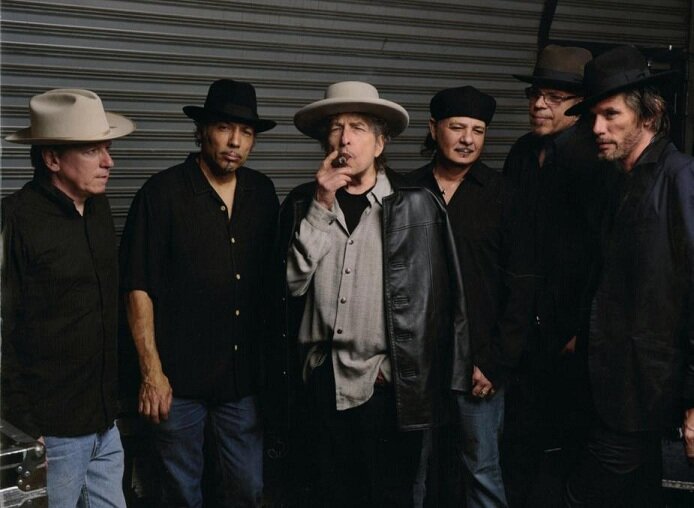
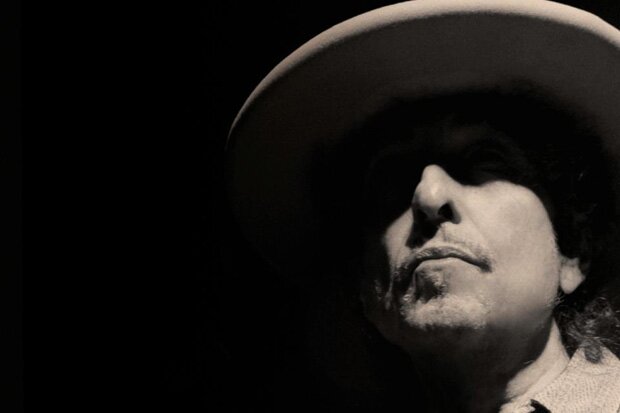
Let’s not mince words. Bogart was a genius. Where could you find a comparable figure? Not in his own field: there was no actor ‘like’ Bogart. Not in another era, because even Bogart couldn’t have become Bogart in any other time or place than 40s Hollywood. If pushed, the closest you might get would be someone like Picasso, Muhammad Ali, or Bob Dylan: a figure so singular that they transcend any sense of being the best at what they do; instead, what they do becomes defined by them.

Like Bob Dylan, Humphrey Bogart is a subject most people probably expect has been more than adequately documented over the years: after all, the man has been dead for over half a century, and he’s one of the best-known, most blazingly iconic movie stars of all time. Surely there are hundreds of Humphrey Bogart books? And who on earth could see any need for another one? Well, the reality is very different: there’s a surprising dearth of Bogart books in general, and an even more remarkable scarcity of good Bogart books. Worse still, if you were looking for a good Bogart book that does a good job of covering the films of Humphrey Bogart in any depth, you’d have to look even harder. In fact, you’d have to write it yourself.

Continue reading

Future of Photography Q&A No.11 – Jeff Curto

Oomska’s ‘Future of Photography’ Series continues…

We presented our interviewees with a set list of questions, and left the matter of in what format and at what length they should answer entirely up to them. Here are Jeff Curto’s responses.

1. How and when did you first become interested in photography? What was the trigger which led you to take a serious interest? How different would that trigger be now, with all the changes – technological and otherwise – in photography during the intervening years?

When I was 8 years old, I caught my first real fish. Rather than the little stream trout I was used to catching and tossing back, this was an 8-pound Northern Pike, a hideously ugly thing that was, to my young eyes, the most magnificent creature I’d ever seen. To mark the occasion, my father wanted to take a picture of me with my fish. He told me to hold it way out in front of me so it would, as he put it, “look like a monster in the picture; wait till you see it!” Sure enough, when the snapshots came back from the camera shop, the combination of my dad’s camera technique and my pose had made that 14-inch Northern look just about as big as I did.

It was with that picture that I began to realize that a photograph (and the way it was made) could be a lot more complex than I had ever suspected before. When I started making my own photographs a short while later, my life changed in the same way that falling in love with any one or any thing can change a person.

Because the “trigger” for my interest in photography was something that is what I would call “universally photographic”, it’s unlikely that the changes in photography over the last several decades would change anything about the way my trigger works. I’m still fascinated by the way photography sees the world and how that way is different from the way our eyes see it.

Continue reading

Future of Photography Q&A No.10 – Peter Marshall

Oomska’s ‘Future of Photography’ Series continues…

We presented our interviewees with a set list of questions, and left the matter of in what format and at what length they should answer entirely up to them. Here are Peter marshall’s responses.

1. How and when did you first become interested in photography? What was the trigger which led you to take a serious interest? How different would that trigger be now, with all the changes – technological and otherwise – in photography during the intervening years?

When I was a small kid around 1950 a we got a stack of old National Geographics from the 1930s passed on to us when a rather wealthier relative died. We used to spend hours looking at the pictures and decided I wanted to be a photographer. At 9 or 10 I was given a cheap plastic Brownie camera one Christmas by my oldest brother, a keen but very amateur photographer, and I was very disappointed when I took the film out of the back to find no pictures on it – with digital I would have been spared that disappointment! More seriously, I grew up virtually without money in a home where a film in the family camera had to do for at least two year’s annual holiday (they did get a dozen exposures after all) and that Brownie had been played with until it fell to pieces long before I could afford to make an actual picture. It was only in my mid-twenties when I got a real job that I could afford to take up photography properly.

Continue reading

Future of Photography Q&A No.9 – Nick Turpin

Oomska’s ‘Future of Photography’ Series continues…

We presented our interviewees with a set list of questions, and left the matter of in what format and at what length they should answer entirely up to them. Here are Nick Turpin’s responses.

1. How and when did you first become interested in photography? What was the trigger which led you to take a serious interest? How different would that trigger be now, with all the changes – technological and otherwise – in photography during the intervening years?

My father introduced me to photography when I was a teenager, still at school, he built a darkroom for me in our second toilet at home. I went on to specialise in photography on my foundation course for a year then moved to London to do a BA in Photography, Film and Video at The University of Westminster. In my second year I shot two black and white stories, one about children with Leukaemia living around the Nuclear Reprocessing Plant at Sellafield in Cumbria and one about the closure of the coal mine in the village of Aberfan in South Wales where a generation of children was lost in a landslide in 1966. I showed this work to the Picture Editor of the Independent Newspaper and ended up quitting my course to be a press photographer, I was 20 and had been taking pictures for just three and half years.

So my entry into professional photography was extremely rapid, I didn’t even really have time to think about what I wanted to do with the medium until much later. In a way I was working as a photographer daily for a number of years before I really discovered and came to understand it’s unique quality and power. It was when I eventually understood what photography could do that I left the Independent Newspaper in order to pursue it, that was seven years later.

‘Fallen Man, Paris, France 1967′ by Joel Meyerowitz is a photograph that I saw first in the college library and then later in the Street Photography book ‘Bystander’, this picture was enormously significant for me because it was the most extraordinary frozen moment of life and showed me how ‘revelatory’ the process of photographing could be. How could you even begin to set out to take a photograph like that? It was so exciting, I knew that was the kind of picture I wanted to make and I knew if I did, I would be working right in the sweet spot of the medium, utilising exactly what the camera does best.

Many lament the passing of film and criticise the digital camera but for me this is nostalgic nonsense, the digital camera is an enormous bonus for Street Photographers like myself who can pursue elusive moments endlessly with little real cost. I shoot a lot and I like to work that way, it allows for wonderful accidents and unique ‘untakeable’ photographs.

Continue reading