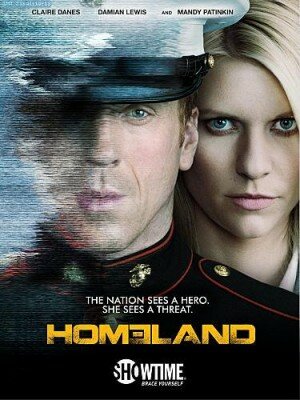
Homeland: Smart New Show, Same Old Stupid

‘Homeland’ has been critically praised for its intelligence, but its reliance on weary stereotypes often makes it feel like ‘24’ in drag.

Writing in The Guardian, Rebecca Nicholson has praised ‘Homeland’, a new Showtime TV series, as “a grownup thriller” that “feels like it’s addressing the moment.” The very fact, however, that the series presents a world preoccupied with the War on Terror and still fixated on the possibility of a surprise terrorist attack on U.S. soil undermines fatally the argument that it addresses the moment. In the current reality, our fears centre on the concrete effects of economic stagnation and the ongoing failures of the markets, not on the remote possibilities of terrorist infiltration. The vocabulary of dread has shifted from sleeper cells and jihad to unsecured bondholders, stagflation and quantitative easing. In terms of ideas that trouble the collective psyche, waterboarding has been displaced by the double dip. Moreover, it is eight years since the first broadcast of Adam Curtis’s ‘The Power of Nightmares’ brilliantly uncovered the War on Terror and the great threat of al Qaeda as “a dark illusion that has spread unquestioned through governments around the world, the security services and the international media.” Homeland strives to perpetuate that increasingly shaky illusion, and allies it to other older, equally suspect ones.

In her piece, Nicholson asserts that “Homeland stands out among a glut of excellent shows because it continues US television’s current and welcome fixation on complex and flawed women.” This must be taken as a reference to the show’s central protagonist, CIA agent Carrie Mathison (Clare Danes), who comes to suspect that Nicholas Brody (Damian Lewis),  a U.S. Marine liberated from captivity in Afghanistan after eight years, has been ‘turned’ and now represents a sleeper threat to U.S. national security. While there is something novel in having a woman as the audience surrogate in a 24-like story, Mathison is scarcely a measure of gender progress. Rather than representing some new high-water mark in the depiction of women on television, she is presented in a disturbingly old-fashioned manner as an imbalanced, unreliable, even hysterical woman, whose judgment is not to be depended upon completely. We are informed of this quite quickly when one of her colleagues discovers her antipsychotic medication. Mathison is shown to be obsessed with her investigation to an unhealthy degree, even coming on to her own boss (who naturally, manfully resists her hysterical advances) in order to enlist his support of her cause. In the first episode, the writers pull out all the stops to complete this portrait of female instability with a jarring and heavy-handed scene in which Mathison states her preference for no-strings-attached sex with a stranger, as if to complete the tabloid stereotype trifecta of women, mental illness and promiscuity. In the male dominated world of espionage and the military sketched in the show, her unique ability to perceive the threat represented by the repatriated Marine is sadly just a resprayed version of “woman’s intuition,” or other discredited antiquated concepts used to hold women separate from the masculine world of rational thought.

Reality takes a further battering when the series shows her struggling to persuade the disbelieving and reluctant national security leadership to take seriously the information she begins to supply. Indeed, she is chastised for not going through proper channels before setting up detailed surveillance in Brody’s house—the other homeland alluded to in the show’s title. This decorous legalistic caution is greatly at odds with the often dangerously pre-emptive approach of the U.S. government in reality. While the powers-to-be in the show seem inert and complacent in the face of the threat identified by Mathison, in the real-world they happily bend national and international law past breaking point to pursue even the vaguest of threats, such as hacker Gary McKinnon, who almost cluelessly penetrated the Pentagon’s computer network in search of evidence of UFOs. In reality, a person in Mathison’s position of authority would only have to whisper “PATRIOT Act” for the state apparatus to descend with crushing force on the unfortunate suspect, regardless of prima facie evidence or probable cause.

The claim that ‘Homeland’ is “much more contemplative and sophisticated” than ‘24’ falls just as flat when it comes to the depiction of geopolitics, which, as usual, reduces to the “good guys of the West versus the bad guys of everywhere else” level of discourse of George W. Bush’s presidency. The enemy is nominally al Qaeda, but really is the Oriental ‘Other’ identified by Edward Said as having lived in Western characterisations of the Middle East for centuries. So far, the few representatives of the region to appear in ‘Homeland’ have conformed to existing stereotypes, including, predictably, a murderous Bin Ladenesque type named Abu Nazir.  Upholding another stereotype that is at least as old as Rudolf Valentino, there is a decadent, somewhat Westernised, Saudi Prince whose entourage includes expensive white prostitutes who must undergo a detailed audition that suggests, in line with countless earlier fictions, a kind of pathological depravity within Arabs. Finally, we have the Prince’s major domo, who resembles no one so much as Jafar, the treacherous Grand Vizier in Disney’s ‘Aladdin’. As the series teases out the question of whether or not the repatriated Marine has been brainwashed, it reveals that he has converted to Islam, creating another ugly imaginative association that relies on existing prejudices that a White, educated Westerner would have to be either crazy of mentally ill to fall under the sway of barbarous Islam.

None of this is to say that the show is not entertaining or enjoyable. I’m certainly signed up for seeing whether or not Brody is going to pull a Lee Harvey Oswald, and whether Mathison will rediscover her mental equilibrium by getting the bad guys. What ‘Homeland’ is not, for certain, is some sort of insightful, serious alternative to the codology and bunkum of ‘24’. Instead, in its huff and puff to tell an intriguing yarn, it shows how little has substantially changed, at least in the waters of popular culture, when it comes to gender and cultural politics.


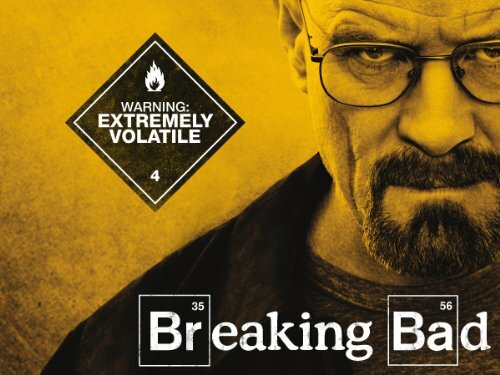
Breaking Bad: How Good TV Goes Bad

‘Breaking Bad’ is ostensibly the story of how a good, indeed gifted, man goes bad. It is also, however, a cautionary tale about the way in which good TV goes bad.

In its first two seasons, ‘Breaking Bad’ was a gripping, blackly comic tale that skilfully led viewers down an excruciatingly entertaining story path in the company of Walter White (Bryan Cranston), a family man and gifted chemistry teacher who turns to “cooking” crystal meth when he learns he has terminal cancer. Over time, we see Walter “break bad” from a weak, law-abiding citizen into a focused, dangerous criminal. We see a man unaccustomed to violence assimilate the ruthless tit-for-tat logic demanded by the criminal marketplace. Now, however, by the end of Season 4, the series has degenerated into a shrill mess complete with mastermind villains and wing-nut assassination schemes that would have felt ridiculous even as off-screen B-plots in a much less grounded show, like 24. In Seasons 3 and  4, ‘Breaking Bad’ has found itself in a kind of dead-end loop, mostly a consequence of its creators first falling in love with ice-cold drug kingpin Gustavo ‘Gus’ Fring (Giancarlo Esposito), then struggling to make more of this character, and latterly spending many episodes trying to free the show from the subterranean sterile lab of Gus’s omniscience.

Continue reading

A Living Wage for The Walking Dead

Does the current vogue for Zombies say something about the state of our society? Tony McKiver invetigates…

There is meaning to our monsters. Zombies, for example, keep coming back to life to haunt us. “Duh,” as they might themselves moan: That’s what Zombies do. But over a century of movies and comic books—and, more recently, video games and TV shows—they keep coming back in different ways. These variations have been interpreted as corresponding to concerns within broader society. Such a reading allows George Romero’s Night of the Living Dead, Dawn of the Dead and Day of the Dead to be seen clearly in relation to the unfolding crises of the time, with the Zombies playing second-fiddle to the real villains of racial and gender discrimination, or unchecked militarism. In these films, there is little to be mourned about the world that has been overrun by the undead.

Continue reading

Gamblers’ Vigil – The Long Wait for David Milch’s ‘Luck’

Still smarting over the untimely demise of ‘Deadwood’, David Milch hits back, with ‘Luck’.

“After I do three years you suspect me? I take a fall protecting how many people… You got qualms? Three years!”

Like gamblers slouched against a rail tearing up losing slips, some TV viewers have been waiting for ‘Luck’ a long time. For many, the vigil stretches back to 2006, when ‘Deadwood’ was summarily cancelled. The lesser number of souls who found magic in the one season of ‘John From Cincinnati’ have been marking time since 2007. If you were a special kind of addict, you may even have experienced the rise and fall of hopes that accompanied reports of ‘Last of the Ninth’, a prospective series that was commissioned by HBO, but never got beyond the pilot stage. The substance to which this cohort of addicts is in thrall is the writing of David Milch.

Continue reading

Lost

No, No, Please Don’t Tell Me – Why Lost Should Keep Its Secrets

by Steve Mainprize

Once upon a time, there was a nice doctor who got stranded on a mysterious island.

After that, things got a bit complicated.

As loopy old Lost gets closer to its conclusion, it faces the thorny problem of how to neatly tie up six seasons of interconnecting characters, events, timelines and realities. To its credit, the show is currently swaggering along the home straight, give every impression of knowing where it’s going, despite a frequently expressed view early on, particularly during its second season, that the writers were making it up as they went along. The question, given the enormous amount of continuity baggage that Lost is dragging towards the finish line, is just how satisfying that conclusion can possibly be.

I’m not going to even start listing the plot questions that still remain to be answered. I did start trying to do that, but every mystery I wrote down reminded me of two more, and I ended up feeling dizzy and had to lie down for a bit. Either you watch the thing and you’re well aware of its capacity for confusing its core audience, or you don’t and anything I tell you here will make you think I’m hallucinating. Quick plot summary: there are mysterious forces at work in the world of Lost, inscrutable factions are manoeuvring towards unknown objectives, and none of the (many) main characters have much of a clue about what the hell’s going on. Furthermore, neither do we, the viewers, and there’s only a limited amount of time remaining in which to resolve it all to our satisfaction.

The task facing the writers is, in fact, two-fold. Firstly, they are expected to explain everything. Then, they have to make sure that they wrap the series up in satisfying manner. To my mind, these are different objectives, and the only one that actually matters is the second one.

The internet’s most extensive resource for Lost fans is the wiki site lostpedia.com. The site has a page dedicated to listing unanswered questions, and at the moment it lists over 170 of them.

Well, first of all, it’s entirely unfeasible that anything like all of these can be answered in the remaining episodes, unless the remaining episodes are going to be filled with lots of clunky exposition. To the writers’ credit, they have largely avoided having to do that so far, and I don’t expect them to change their style at this late stage.

Secondly, even for the big question – what is the nature of the Island? – the answer doesn’t particularly matter. It’s something beyond our knowledge of the physical universe, take your pick from future technology, alien artifacts, magic, quantum physics*, whatever. It doesn’t matter which you choose, or which one the writers hand you. Writers of “genre fiction” (sci-fi, fantasy) have always had the unfair option of being able to pull that sort of stuff out of their backsides.

So, given that the details of the answers are unimportant, why waste time thinking about and delivering those answers? In fact, to hand us some kind of “solution” would actually run counter to the entire ethic of the series.

Obfuscation is the natural order of things in Lost. From the viewpoints of the protagonists, and therefore from our viewpoint, Something Very Weird is going on, but the few characters who appear to know what it is certainly aren’t telling us. The promise of answers to come leads us on and keeps us watching. Some viewers baled out early on, frustrated about this state of affairs, but I think that this is to misunderstand the beauty of the programme.

The point of Lost is not that the fun is in getting the answers, it’s that the fun is in not knowing. The word itself, “Lost”, doesn’t just refer to the characters, physically lost on the island or emotionally lost within their own lives and relationships. It also refers to us, the audience, and our confusion over the events unfolding on the screen.

Once you accept this, realise that the show is yanking your chain, and are prepared to have your chain yanked, there is an awful lot of fun to be had with it.

Frankly, I hope Lost doesn’t try too hard to give us the answers. Most of the important stuff we’ve already figured out, at least to whatever extent that it matters. Meanwhile, the troubling suspicion remains that surely, something, somewhere in the six years of the show has no logical explanation: perhaps a plot thread that never got resolved, or something the writers wrote that contradicted something from earlier that they’d forgotten. You can bet that obsessives everywhere will be trying to pick holes once the final episode has been shown, and I suspect that the fabric of Lost isn’t strong enough to stand hole-picking of the calibre that the entire internet can bring to bear**.

So my wish for the finale of Lost: don’t give us the answers, we don’t need them. By all means resolve the characters’ story arcs, but to remain true to the entire vibe of the show, it needs to leave the major mysteries unanswered. In fact, if you want to go nuts, why not throw us another few mindfucks in the last episode? Sure, there’d be complaints. Probably there’d be tears. But after the dust settled, I think that people who love the programme would realise that it’s better to remember it the way it was throughout its run: not as an unsatisfying explanation, but as a glorious perplexity.

* Quantum physics isn’t actually “beyond our knowledge of the physical universe”, but it might as well be in genre fiction.

** In fact, rather than explain everything, I’d rather they went with the “it was all a dream!” ending. At least that’d be funny.

The final episode of the final season of Lost will be broadcast on May 23, 2010. And then we’ll know. Maybe.